Our countries


Europe
 Austria | Österreich
 Belgium | BelgiqueBelgium | België
 Bulgaria | България
 Croatia | Hrvatska
 Czechia | Česko
 Denmark | Danmark
 Estonia | Eesti
 Finland | Suomi
 France
 Germany | Deutschland
 Hungary | Magyarország
 Ireland | Éire
 Italy | Italia
 Latvia | Latvija
 Lithuania | Lietuva
 Netherlands | Nederland
 Norway | Norge
 Poland | Polska
 Portugal
 Romania | România
 Slovakia | Slovensko
 Slovenia | Slovenija
 Spain | España
 Sweden | Sverige
 Switzerland | SchweizSwitzerland | Suisse
 Turkey | Türkiye
 United Kingdom
Search
MONIER Clay Tiles: The Specification Choice for Heritage Buildings in Malaysia
Share:
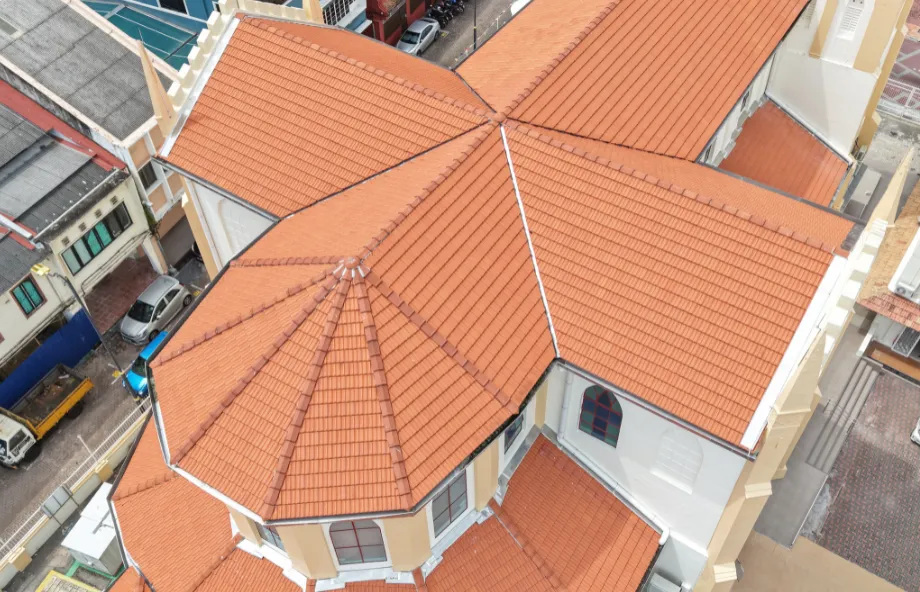
MONIER Clay Tiles for Heritage Buildings in Malaysia
Heritage building conservation in Malaysia operates within a defined legal and regulatory framework. Under the (Akta Warisan Kebangsaan 2005, Act 645), conservation works on listed heritage buildings must respect material authenticity using traditional materials, techniques, and finishes that match the original.
Academic research on Malaysian heritage building conservation, including studies published on conservation practice under the Act, confirms that traditional materials such as terra cotta and clay roof tiles are a primary concern in restoration and refurbishment works. Where the original roofing material was clay tile, conservation guidelines generally require that the same material type be retained or used in replacement.
This article is written for architects, heritage consultants, institutional project teams, and government bodies working on conservation, refurbishment, and new-build projects where material authenticity is a documented requirement. It covers what MONIER clay tiles deliver, why they are used in heritage roofing projects, and how to engage the specification process.
Why Clay Tiles Are Specified as Non-Substitute in Malaysian Heritage Projects
Clay tiles have been used in Malaysian building construction for over a century. The pre-war shophouses of Georgetown, the colonial-era institutional buildings of Kuala Lumpur, and the vernacular architecture of Melaka's heritage zone all feature clay tile roofing as a defining material characteristic.
When these buildings are conserved, refurbished, or reconstructed, maintaining material authenticity is not cosmetic. It is a regulatory requirement under heritage conservation guidelines, including those administered by the Department of National Heritage (Jabatan Warisan Negara) and, for institutional projects, by JKR and state heritage authorities.
Concrete tiles may visually resemble clay at a distance. They do not carry the same material character, firing process, natural colour variation, or long-term weathering behaviour. For heritage compliance, this distinction matters.
Clay tiles have been part of Malaysian building construction for well over a century. The pre-war shophouses of George Town, the colonial-era institutional buildings of Kuala Lumpur, and the vernacular architecture of Melaka’s UNESCO World Heritage City zone all feature clay tile roofing as a defining material element.
The Jabatan Warisan Negara () Malaysia’s Department of National Heritage, operating under the Ministry of Tourism, Arts and Culture, administers conservation guidelines that require restoration works to match the original material, scale, texture, and appearance of heritage buildings. For buildings originally roofed with clay tiles, this means clay tiles are the appropriate material for restoration.
While concrete tiles may appear similar to clay at a distance, they differ in production process, material composition, natural colour variation, and long-term weathering behaviour. For projects assessed by JWN or state heritage authorities, these differences are relevant to material authenticity compliance.
What MONIER Clay Tiles Deliver: Specifications That Support Heritage Cases
MONIER clay tiles are kiln-fired from natural clay. The performance specifications are as follows:
- Design life: Over 100 years, the longest of any roofing material in the Malaysian market, supporting the case for long-term heritage preservation
- Carbon footprint: 4.4 tCO₂ per 100 sqm, the lowest of any tile material, relevant to institutional ESG and Green Building Index (GBI) targets
- Wind uplift resistance: Up to 290 km/h, as tested under the MONIER system specification
- Water resistance: Naturally waterproof; low leakage risk without reliance on sealant-dependent joints
- Sound insulation: 48 dB built-in sound attenuation
- Thermal performance: High, slow heat absorption helps stabilise indoor temperature in heritage interiors
- Rust: Not applicable, no metal content
These specifications support the heritage case on multiple dimensions: material authenticity consistent with original clay tile construction, a service life aligned with the expected preservation horizon of listed buildings, and sustainability credentials relevant to institutional reporting requirements.
Minimum Pitch and Structural Considerations for Heritage Roof Structures
Clay tiles require a minimum roof pitch which varies by product design. Most traditional Malaysian heritage buildings with clay tile roofing were constructed with pitches of 30 to 45 degrees, placing them within the compatible range for MONIER clay tiles in most conservation projects.
Where an existing heritage roof structure is being refurbished, a structural assessment is required before new clay tiles are installed. As noted in Malaysian , timber trusses and battens in older buildings are subject to decay from moisture exposure over decades, and may require repair or selective replacement before re-tiling.
MONIER’s RoofPro-certified installers work within these structural constraints and are able to coordinate with structural engineers on project-specific requirements.
How to Specify MONIER Clay Tiles for a Heritage Project
For architects and consultants preparing specifications for heritage projects, MONIER clay tiles are supported by technical data sheets suitable for tender documentation and regulatory submissions. The key specification points are:
- Material: Kiln-fired natural clay
- Minimum pitch: Varies by tile design
- Underlayment: Radiant barrier to be installed between tile battens and rafters with a minimum 150 mm overlapping length between layers and a nominal 10 mm drape between rafters
- Installation: MONIER RoofPro-certified installer required for system guarantee eligibility
- Guarantee: MONIER Roof System Guarantee available on completion of RoofPro-certified installation to specification
For project-specific technical documentation, MONIER’s specialist team can provide data sheets, reference project details, and specification language suitable for tender documents and heritage authority submissions. Engage early to ensure the specification is accurate before tender stage.
Visit the Experience Centre or Contact Our Specialist Team
MONIER's Experience Centre in Bukit Kemuning has the clay tile range available for review in person. For architects and specifiers preparing heritage submissions, seeing the material directly and discussing the technical requirements with a MONIER specialist is the most efficient way to confirm specification details.
Contact our specialist team or visit the Experience Centre in Bukit Kemuning to discuss your heritage project requirements.
Frequently Asked Questions
Are MONIER clay tiles suitable for Malaysian heritage conservation projects?
MONIER clay tiles are kiln-fired natural clay. Conservation guidelines administered by Jabatan Warisan Negara require that restoration materials match the original in terms of material type, appearance, and texture. For heritage buildings originally roofed with clay tiles, MONIER clay tiles satisfy this material authenticity requirement. For project-specific compliance confirmation, consult the relevant heritage authority with MONIER’s team.
What is the lifespan of MONIER clay tiles on a heritage building?
MONIER clay tiles are designed for over 100 years of service. This is the longest design life of any roofing material in the Malaysian market, making them the most appropriate specification for buildings where long-term material integrity is a primary requirement.
Do MONIER clay tiles comply with Malaysian heritage conservation requirements?
MONIER clay tiles are kiln-fired natural clay, which satisfies the material authenticity requirement common in Malaysian heritage conservation guidelines. For specific regulatory compliance confirmation, consult the relevant heritage authority or JKR with MONIER's technical data sheet for the project.
What structural checks are needed before installing clay tiles on a heritage building?
A structural assessment of the existing roof is recommended before re-tiling. Heritage building research notes that timber trusses and battens in older Malaysian buildings are susceptible to decay from moisture exposure, and may require repair or replacement prior to installation. MONIER RoofPro-certified installers can work alongside structural engineers on these requirements.
How do I get technical documentation for MONIER clay tiles for a tender submission?
Contact the MONIER specialist team. Technical information, product specifications, and reference project information suitable for tender documentation and heritage authority submissions are available on request. Early engagement ensures the specification is accurate before tender stage.